Buying second-hand is one of the easiest ways to cut your spending without cutting your quality of life. A barely-used laptop, a designer jacket, a solid oak desk – these things exist on the market every day, often at a fraction of their original price.
But finding them takes more than just luck. Here is what actually works.
1. Know which platform is best for what you are buying
Not all marketplaces are equal. Each one has a sweet spot:
- Vinted dominates for clothes, shoes, and accessories
- eBay is strongest for electronics, collectibles, and niche items
- Facebook Marketplace is best for furniture and large local items
- Subito (Italy) and Wallapop (Spain) are gold mines for local deals across all categories
Starting on the right platform saves time and gets you better prices from the start.
2. Search like a seller, not a buyer
Most sellers do not write perfect listings. Someone selling an iPhone might write "apple phone" or just the model number. Try misspellings, abbreviations, and partial model names. You will find listings that most buyers walk right past.
3. Set your ceiling before you start browsing
It is easy to justify spending a little more when you are already looking. Decide your maximum price before you open the app – not while you are already excited about a listing. This one habit alone saves most people more than any negotiation trick.
4. Timing matters more than most people think
The best time to buy is when sellers are most motivated:
- End of month – people moving house and clearing out fast
- January – post-Christmas decluttering
- Late spring – wardrobe changes and pre-summer cleanouts
Check your saved searches more often during these windows.
5. Do not be afraid to negotiate – but do it right
Most sellers on second-hand platforms expect some negotiation. A few principles that work:
- Make your first offer reasonable (10–20% below asking), not insultingly low
- Mention something specific about the item to show you have actually looked at it
- If you are buying multiple items from the same seller, always ask for a bundle deal
- Cash (or instant transfer) is often worth a small discount
A polite, specific offer beats a lowball every time.
6. Check sold listings to know what things are actually worth
On eBay especially, you can filter by "sold" listings. This tells you what items actually sold for – not what sellers hope to get. It is the fastest way to know if a listing is a deal or wishful pricing.
7. Look for listings with bad photos
A great item with terrible photos gets far less attention. Sellers who do not bother to stage or light their photos properly often get fewer messages and lower offers – which means more room for you. If the item itself looks solid, bad photos are your friend.
8. Be fast – the best deals do not last
This is probably the most important tip on the list. When something is listed at a genuinely good price, it gets noticed immediately. The buyer who responds first almost always wins.
This is where most people lose deals – not because they did not find the listing, but because they found it too late.
The practical solution is to stop relying on manual checks and use a monitoring tool instead. FlowMarket tracks listings across multiple platforms simultaneously – Facebook Marketplace, eBay, Vinted, Subito, Wallapop – and sends you a real-time alert the moment something matching your criteria appears.
You set it up once (item, price range, condition, keywords, location) and let it run in the background. Instead of checking five platforms every few hours, you just act when a match shows up. Searching is free; that background checking is the paid Base plan, with a 3-day free trial. Available on Android. See plans.
Stop checking. Start finding.
FlowMarket monitors eBay, Vinted, Wallapop, Facebook Marketplace, Subito and more. Get instant push notifications when new listings match your search.
Get FlowMarket Free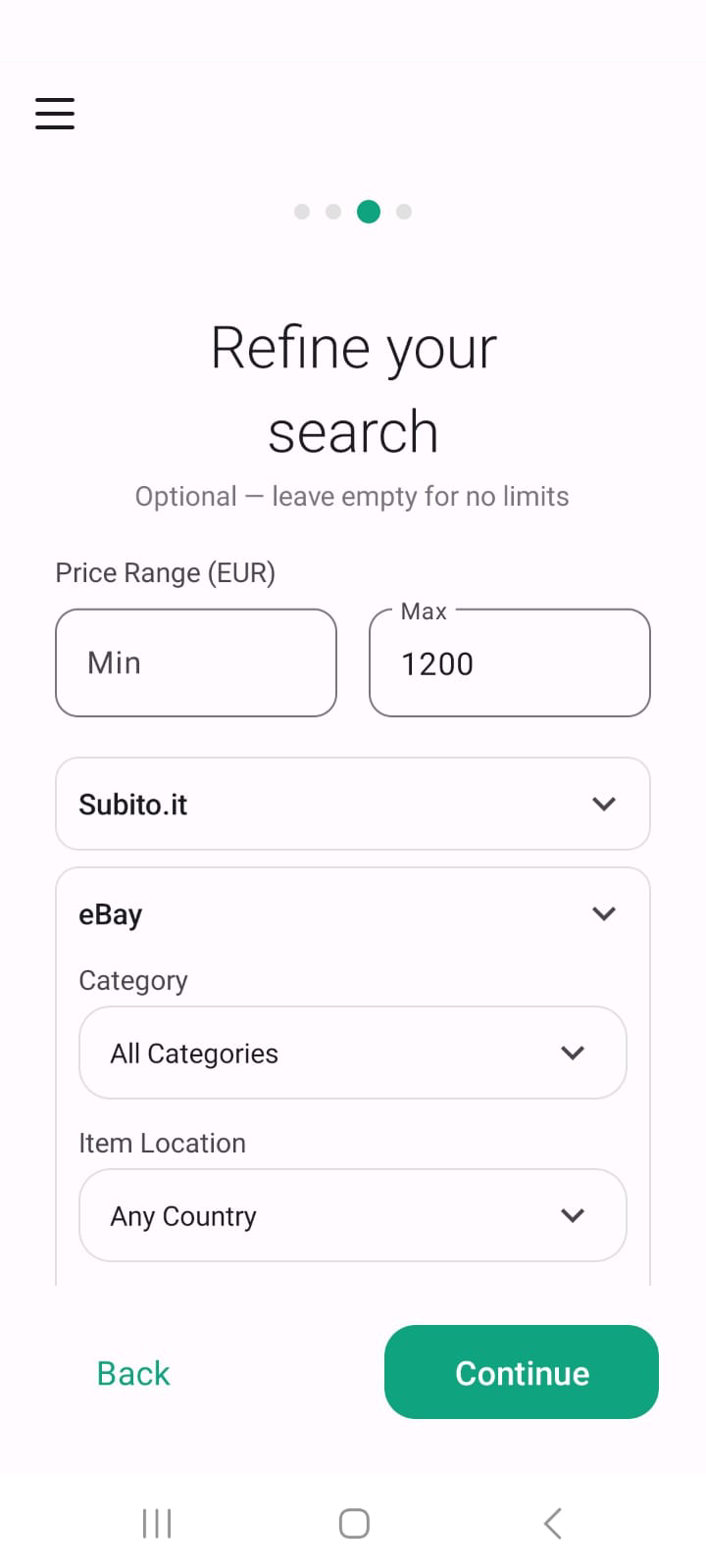
9. Save your searches and check them consistently
If you are not using automated alerts yet, at minimum build a consistent manual habit. Every major marketplace lets you save searches. Review them at a set time – morning coffee, lunch break, whatever works. Consistency beats intensity: checking once a day reliably beats checking five times one day and forgetting for a week.
10. Expand your radius for high-value items
For expensive items – furniture, appliances, bikes – it is worth searching further than your immediate area. A 50-euro train ride to pick up an item you found for 250 euros less than retail is still a great deal. Most buyers only search locally, so expanding your radius quietly reduces your competition.
11. Build a reputation as a reliable buyer
Leave reviews, show up when you say you will, and communicate clearly. On platforms like Vinted and eBay, sellers with multiple offers will often choose the buyer with the better profile – even if their offer is slightly lower. A good track record is a quiet advantage that compounds over time.
Bottom line
Saving money on second-hand marketplaces is not about getting lucky. It is about knowing where to look, acting fast, and removing the friction from your process. Apply even a few of these consistently and you will start noticing the difference – both in what you pay and in the quality of what you find.